
Best Wavelength Definition in Physics
Have you ever wondered what exactly wavelength definition in physics means? Sure, it’s defined as the distance between two consecutive crests of an electromagnetic wave, but what does that really mean? How do we use this to measure wavelength in physics? This short article will answer all of these questions and more!
What is wavelength Defination in Physics
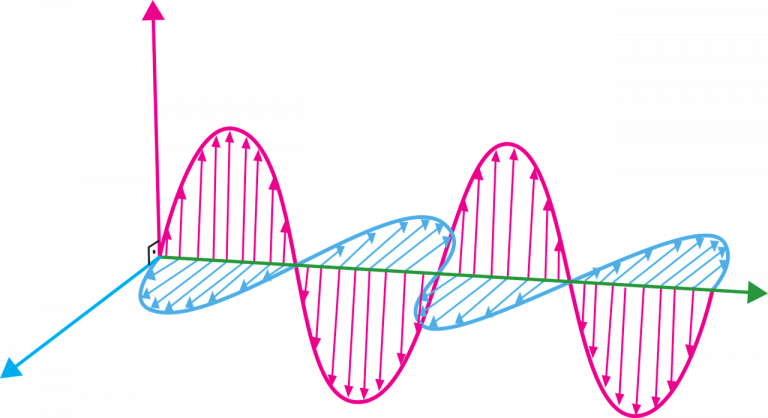
The wavelength of a wave is its distance from peak to peak. Or, if you consider waves of light, from crest to crest. You’ve probably heard that light has a range of wavelengths – for example, we see red, orange, yellow and so on. But what exactly does wavelength mean when it comes to light?
What is a wavelength of light, anyway? Let’s take a look! Here are a few additional things that might be useful to know about: frequency vs. wavelength; electromagnetic spectrum; other types of radiation (radio waves etc.)…! We can find out how long a wavelength is using its frequency: f = v / λ where f stands for frequency, v stands for velocity and λ stands for wavelength.
Wave phenomena

This includes all of light, sound, and all other forms of electromagnetic radiation. All forms of wave phenomena have properties that include frequency, wavelength, and amplitude. A key property related to wavelength specifically is wavelength = speed/frequency. For example, if you know how fast a wave is travelling (for instance its frequency), you can then figure out its wavelength using that formula. If a wave’s frequency were 1Hz (one full cycle per second) it would also have a wavelength of 1 meter since speed*wavelength=1 m/s; 0.001 m/s*1m=0.001m or 1cm (one centimeter).
Types of waves
there are two types of waves, transverse and longitudinal. Light and radio waves are transverse and form when their source vibrates perpendicular to their direction of travel. Examples include electromagnetic radiation such as visible light, microwaves, radio waves, ultraviolet radiation, X-rays, infrared radiation (heat), and gamma rays. Longitudinal waves have their source of vibration along their direction of travel.
Examples include sound waves in air or water molecules compressing to make a wave on a slinky toy. Sources that create longitudinal waves include vibrating musical instruments, ocean swells, and earthquakes. Scientists divide longitudinal waves into compressional vibrations that push and tensile vibrations that pull objects apart. In physics, wavelengths are often labelled by whether they’re compressional or tensile; for example, a guitar string vibrating at 440 Hz emits notes with a wavelength of about 18 cm.
But remember: There’s no universal unit for measuring wavelength; it depends on what you’re measuring! For instance, from lasers to basses to lightning bolts, energy moves with different wavelengths depending on what kind of energy it is.
Speed of wave
The speed of a wave is how fast it travels. wavelength definition In physics? we usually deal with waves on Earth (and other planets), which means that they travel at a finite speed because of air resistance. If you’re going to work with waves on Earth, you need to know that their speed will vary depending on factors like temperature and density. The speed also depends on what type of wave it is: An electromagnetic wave like light travels faster than an acoustic (sound) wave does. All electromagnetic waves have similar speeds.
Sound waves depend on their frequency — high-frequency sound waves (think dogs barking) are faster than low-frequency ones (like thunder). As you can see below, sound waves move through the air around 3×10 m/s while visible light moves much more quickly — around 3×10⁸ m/s. Because every object has a certain speed limit for its molecules, these are as fast as any object can get; if something moves more quickly, its molecules break apart or just turn into plasma!
Reflection, refraction and interference

Consider that when white light passes through a prism, it becomes separated into a spectrum of individual colours. Each colour has its own wavelength (or, more specifically, its own frequency), and all of these waves can interfere with one another. In fact, all waves have a peak and trough; their peaks line up (which creates constructive interference) or are out of sync (which creates destructive interference). The colour our eyes see depends on which wavelengths are interfering with one another.
The same principle applies to visible light as well as radio waves and sound. A complete picture of why we perceive objects as specific colours (and not others) can be found by taking full advantage of how multiple frequencies combine to form visible light — but here’s a quick primer: Red photons will pass through most other non-red photons but be cancelled out by ones that match its frequency, meaning it tends to show up most strongly against yellow backgrounds like yellows painted walls and sunsets.
Also read: Wavelength definition in physics https://en.wikipedia.org/wiki/Wavelength