
Module 5: Fiber Optic Components and Devices
Fiber Optic Components and Devices: Fiber optics, often referred to simply as “optical fibers,” are an integral part of modern telecommunications and data transmission systems. These slender, hair-like strands of glass or plastic have revolutionized the way information is transmitted over long distances.
Fiber optic technology offers numerous advantages over traditional copper-based systems, such as higher bandwidth, longer transmission distances, and immunity to electromagnetic interference. To understand the workings of fiber optic networks, it is essential to delve into the various components and devices that make them function seamlessly.
Fiber Optic Components
Fiber optic components are the building blocks of optical communication systems. These components are designed to manipulate and transmit light signals effectively through the fiber. Let’s explore some of the key fiber optic components:
Optical Fiber:
The core of any fiber optic system is the optical fiber itself. Optical fibers are thin, flexible, and transparent strands made from glass or plastic. They are designed to transmit light signals by internal reflection, allowing the light to bounce off the core-cladding interface, thus staying within the core and minimizing signal loss. Optical fibers come in different types, including single-mode and multi-mode fibers, each with specific applications and characteristics.
Connectors:
Connectors are used to join optical fibers to other fibers or optical devices. They play a crucial role in ensuring efficient signal transmission by minimizing signal loss and maintaining alignment. Common types of connectors include SC (Subscriber Connector), LC (Lucent Connector), ST (Straight Tip), and MTP/MPO (Multiple-fiber Push-On/Pull-off) connectors.
Splices:
Splicing is the process of permanently joining two optical fibers to create a continuous optical path. Splicing can be done using various techniques, such as fusion splicing and mechanical splicing. Fusion splicing, which melts the ends of the fibers together, offers low-loss connections ideal for long-distance transmission. Mechanical splicing involves aligning and securing the fibers with a special connector.
Couplers and Splitters:
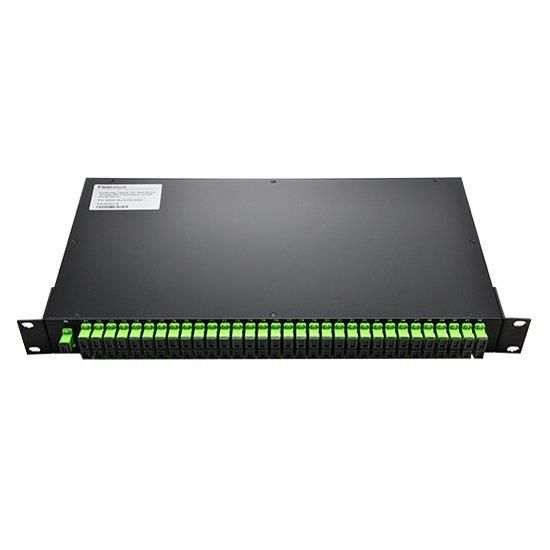
Optical couplers and splitters are used to split or combine optical signals. Couplers take multiple input signals and combine them into a single output, while splitters divide a single input signal into multiple outputs. These components are essential in applications like passive optical networks (PONs) and wavelength division multiplexing (WDM) systems.
Optical Amplifiers:
Optical amplifiers are devices used to boost optical signals to overcome signal loss during transmission. Erbium-doped fiber amplifiers (EDFAs) are commonly used in long-haul and high-speed communication networks to amplify signals without the need for converting them into electrical signals.
Attenuators:
Attenuators are used to reduce the intensity of an optical signal. They are often employed to balance signal levels in a network, prevent overloading of optical receivers, and optimize signal quality. Variable attenuators allow for adjustable signal attenuation.
Fiber Optic Devices
Fiber optic devices are specialized components that serve specific functions within optical communication systems. These devices enable the manipulation, modulation, and detection of light signals for various applications. Here are some important fiber optic devices:
Optical Transmitters:
Optical transmitters are devices that convert electrical signals into optical signals. This conversion is typically achieved using semiconductor lasers or light-emitting diodes (LEDs). Transmitters are a fundamental component in fiber optic communication systems, as they launch the signal into the optical fiber.
Optical Receivers:
Optical receivers perform the reverse function of transmitters, converting incoming optical signals back into electrical signals. They consist of a photodetector, such as a photodiode or avalanche photodiode, which generates an electrical current when exposed to light. Receivers are crucial for extracting information from the optical signal.
Optical Modulators:
Optical modulators are used to encode information onto the optical carrier signal. They vary the properties of the light signal (intensity, phase, or frequency) in response to an input electrical signal. This modulation process is essential for transmitting data over optical fibers, and various types of modulators exist, including electro-absorption modulators and Mach-Zehnder interferometers.
Optical Switches:
Optical switches are devices that route optical signals from one path to another. They are essential for creating flexible and dynamic optical networks where signals can be redirected based on network demands. Optical switches can be categorized as mechanical, electro-optical, or micro-electromechanical systems (MEMS) switches.

Optical Filters:
Optical filters are used to selectively transmit or block specific wavelengths of light. They play a crucial role in wavelength division multiplexing (WDM) systems, where multiple optical channels of different wavelengths share the same fiber. Filters can be either wavelength-selective or wavelength-blocking, depending on their intended function.
Optical Isolators:
Optical isolators are devices that allow light to pass through in one direction while blocking it in the opposite direction. They are essential for preventing back-reflections, which can disrupt the stability and performance of optical systems. Optical isolators are commonly used in laser applications and high-power optical systems.
Optical Switching and Routing Devices:
Optical networks require devices that can switch, route, and manage optical signals efficiently. These devices include optical cross-connects (OXC), optical add-drop multiplexers (OADM), and optical protection switches. They help establish the desired optical signal paths in complex networks.
Applications of Fiber Optic Components and Devices
The use of fiber optic components and devices extends across a wide range of applications, including:
- Telecommunications: Fiber optic networks form the backbone of modern telecommunications systems, enabling high-speed data transmission for internet, voice, and video services. They are used by telecommunication service providers to connect cities, countries, and continents.
- Data Centers: Data centers rely heavily on fiber optic technology for high-capacity data transmission between servers, storage devices, and networking equipment. Fiber optics offer low-latency and high-bandwidth connectivity within data centers.
- Cable Television: Fiber optics are used in cable television networks to deliver high-definition video and digital television signals to subscribers. Fiber-to-the-home (FTTH) deployments provide direct optical connections to homes for enhanced service quality.
- Medical Imaging: Fiber optics play a crucial role in medical applications, such as endoscopy and optical coherence tomography (OCT), allowing for minimally invasive procedures and high-resolution imaging of internal organs and tissues.
- Military and Aerospace: Fiber optic technology is employed in military communication systems, aircraft data networks, and missile guidance systems due to its immunity to electromagnetic interference and lightweight properties.
- Industrial and Manufacturing: Fiber optics are used for precision measurement, control, and monitoring in industrial automation, robotics, and manufacturing processes.
- Sensing and Monitoring: Fiber optic sensors are used in a variety of applications, including environmental monitoring, structural health monitoring, and oil and gas exploration, due to their sensitivity, reliability, and immunity to electromagnetic interference.
Challenges and Future Trends
While fiber optic technology has revolutionized communication and data transmission, it also faces certain challenges and continues to evolve:
- Cost: The initial installation cost of fiber optic networks can be high, primarily due to the cost of optical components and labor-intensive installation processes. However, the long-term benefits often outweigh the initial investment.
- Signal Loss: Despite minimal signal loss in optical fibers, some loss still occurs over long distances. Ongoing research aims to develop more efficient amplification techniques and low-loss fibers.
- Wavelength
Also read: Fiber Optic Components and Devices